

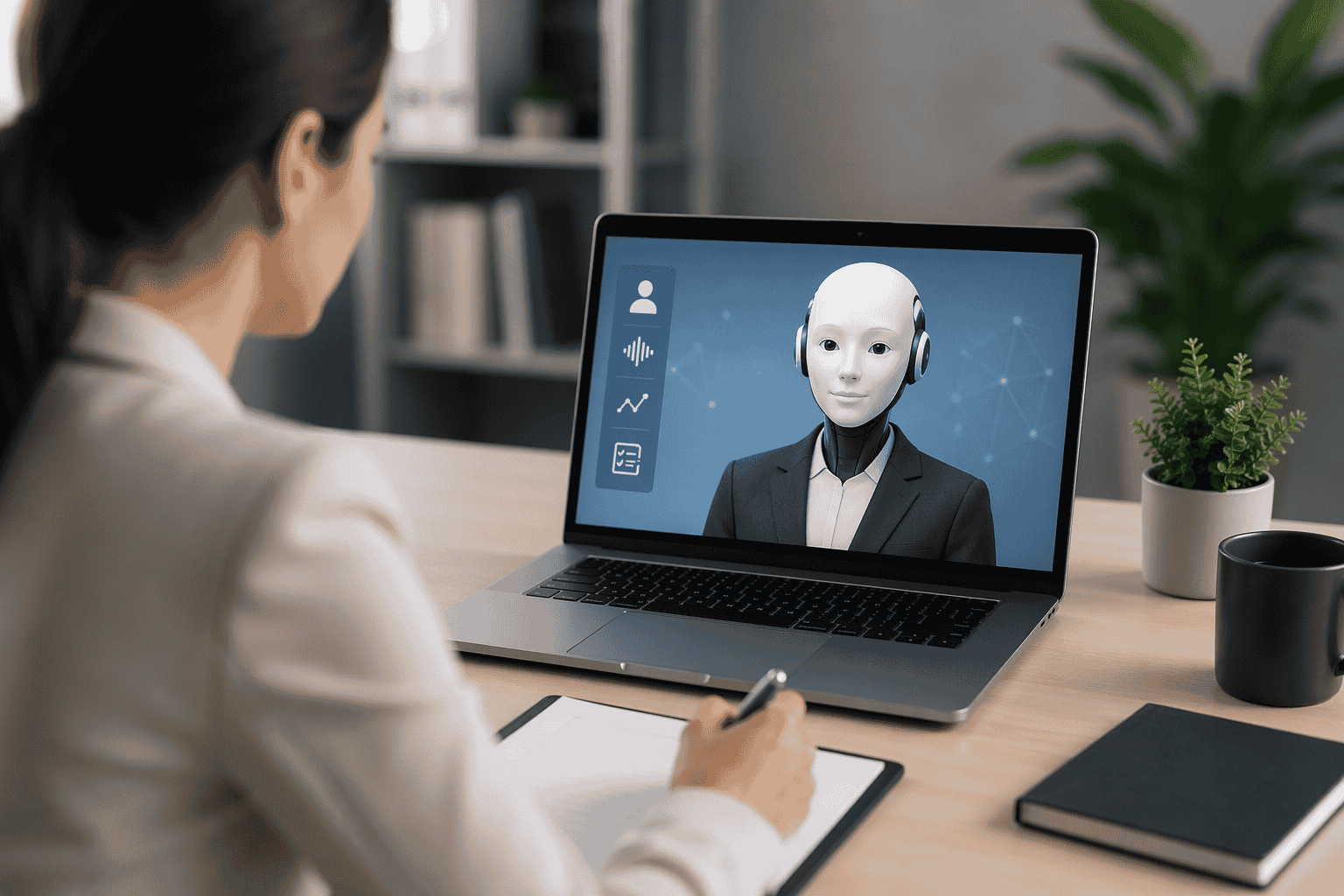
Hiring these days falls short not because there are too few applicants but because evaluations drag on and lack any real consistency. Recruiters pour hours into setting up interview times and repeating the same questions, and still find it hard to judge candidates fairly. Once they finally decide, the strongest people have often moved on to other offers.
The real issue comes down to the method itself, not how hard people work. Traditional interviews take too much time, lack a clear structure, and are hard to manage at scale. AI interview software steps in to fix that. It adds quick turnaround, steady standards, and decisions backed by actual data while still keeping people in charge of the final call.
Bringing in AI interviews does not mean pushing recruiters aside. Instead, it focuses on building a hiring approach that runs quicker, works smarter, and delivers more dependable results.
What is AI Interview Software?
AI interview software is an online tool that streamlines and improves the interview stage through artificial intelligence. Companies use it to run organized interviews, review what candidates say, and pull out useful findings without needing constant hands-on work.
It usually features these elements:
- One-way video interviews
- Automated question delivery
- AI-based response analysis
- Standardized evaluation scoring
The main aim is to build an interview flow that remains consistent and scales easily with demand.
How to Implement AI Interviews in Your Hiring Process
The introduction of AI interviews has to be accompanied by a strategy, as it will make the system successful and help teams actually use it.
Step 1: Identify Roles Suitable for AI Interviews
Some jobs are better suited to AI interviews than others. Begin with spots that see many applicants or require uniform checks, such as entry-level jobs, initial technical reviews, or customer-facing roles.
Step 2: Define Evaluation Criteria Clearly
Before implementing any AI interview software, make it clear what exactly is the most crucial, whether it is skills, eagerness to communicate effectively, the capacity to resolve issues, or a particular degree of technical expertise. The right note and value are achieved through clear criteria that facilitate the provision of reviews.
Step 3: Design Structured Interview Questions
Prepare a set of fixed questions that fit the job requirements.
- Role-specific questions
- Behavioral questions
- Scenario-based questions
This maintains the same standard for every applicant.
Step 4: Choose the Right AI Interview Software
Pick a system that gives you:
- Scalability
- AI-driven evaluation
- Integration with your existing systems
- User-friendly interface
The most appropriate is one that promotes easy installation and invites all to board.
Step 5: Integrate with Your Hiring Workflow
AI interviews should flow seamlessly into the current recruitment procedures you already use. Connect them with your applicant tracking system, calendar tools, and messaging platforms to ensure everything flows smoothly without additional hassle.
Step 6: Train Your Recruitment Team
Make sure that the people in your team know how to use the tool, analyze the findings and integrate the findings of the AI with personal experience when the team members are capable of making a final decision.
Step 7: Start with a Pilot Program
Carry out AI interviews for a limited number of job types or applicants initially. Experiment and see what works, obtain feedback, and then start to scale things up.
Step 8: Monitor Performance and Optimize
Keep an eye on key numbers such as the following:
- Time-to-hire
- Candidate experience
- Quality of hire
Apply what you learn to keep sharpening the overall hiring approach.
Why Companies Are Moving Toward AI Interviews
The pressures on the recruiting teams changed. As increasing numbers of people apply, there are shorter deadlines to make decisions and increased expectations, in general, old-school interviews are just not keeping up. Organizations resort to AI interviews, as they address real decelerations related to speed, consistency, and scalability, not just the desire to follow the trend.
Need for Faster Hiring in Competitive Markets
Strong candidates will not sit around. Any lag in booking interviews or reviewing answers means losing out on top people. AI interview software lets applicants finish their session right away, so recruiters can keep momentum without lowering standards.
Managing High Application Volumes Efficiently
Manual interviews are not able to keep up with the applications that come in by the hundreds or even thousands. AI interviews enable teams to process large batches simultaneously and ensure that no quality candidate is lost due to scheduling problems.
Demand for Consistent and Fair Evaluation
Regular interviews change depending on who conducts them, which creates uneven outcomes. AI interviews lock in the same questions and scoring rules so every candidate gets measured against identical standards.
Reducing Recruiter Workload and Burnout
Recruiters dedicate large chunks of their day to the same interview routines and arranging meetings. AI interview software liberates them to make bigger decisions and create a more meaningful rapport with the candidates, as repetitive tasks are already automated.
Improving Candidate Experience with Flexibility
People can finish their AI interview whenever it suits them instead of matching someone else’s calendar. Such a decision increases attendance and results in a higher number of sessions attended.
Shift Toward Data-Driven Hiring Decisions
Teams are now looking for definite figures rather than just depending on intuition. AI interviews provide structured data, breakdowns of performance, and comparisons across the board that increase the precision of hiring.
Enabling Scalable and Structured Hiring Systems
As businesses grow, employment increases as well. The AI interviews establish a system that can be expanded systematically without compromising the same degree of consistency across positions, departments, or office locations.
Benefits of Using AI Interview Software for Seamless Onboarding
An excellent onboarding experience, in fact, starts long before the new employee reports to work on his first day. It begins with choosing and evaluating individuals in the correct and expeditious manner. AI interview software helps make the right matches, maintain a consistent assessment, and obtain valuable information at the initial stages, making the transition into the job seem faster, clearer, and more organized.
Better Candidate-Role Alignment from Day One
Skills, communication style, and job fit are tested by AI-powered interviews in a predetermined format. Consequently, those who join are better suited to the position initially, reducing mix-ups and enabling them to settle in more quickly.
Pre-Validated Candidate Data for Faster Onboarding
All responses, marks, and knowledge obtained during the interview will be stored within the platform. HR personnel and managers can also observe a prospective employee’s strengths and areas for improvement prior to the commencement date.
Reduced Time Between Hiring and Joining
Quicker screening and choices mean the period from selection to actual start shrinks. Recruits can complete onboarding earlier without waiting for additional review cycles.
Consistent Hiring Leads to Structured Onboarding
Standardized hiring makes planning the next phase simpler. Since everyone arrives with comparable assessment results, companies can build onboarding programs that stay uniform and actually work.
Improved Candidate Experience and Confidence
Any individual who goes through a simple, clear interview process walks out of it better informed about what to expect and with more confidence in the company. Increased confidence typically leads to greater engagement and faster team integration.
Seamless Handover Between Recruitment and HR Teams
The software keeps all applicant information in a single place, giving HR easy access. That setup creates a clean transition from recruitment to onboarding and avoids repeating information or leaving gaps in communication.
Lower Risk of Early Attrition
Stronger assessment produces better hiring choices. When people match the job and its demands right away, the odds of them leaving soon after they start drop noticeably.
Scalable Onboarding for High-Volume Hiring
Organizations that bring in many people at once benefit from steady candidate quality. AI interview software makes it practical to welcome larger groups without losing the planned structure or hurting the overall experience.
Conclusion
Many companies believe their main hiring challenge is finding enough skilled candidates. In truth, the bigger issue lies in evaluations that move slowly and deliver uneven results. Traditional interviews, back-and-forth scheduling, and personal opinions build waste that eats up both time and the chance to hire well.
This is the exact situation where Harjai AI steps in. We offer strong AI interview software built to simplify the entire hiring flow. From running automated sessions and delivering organized scoring to supporting hiring systems that scale, we guide companies away from old, manual methods and toward recruitment powered by clear data and smart processes.